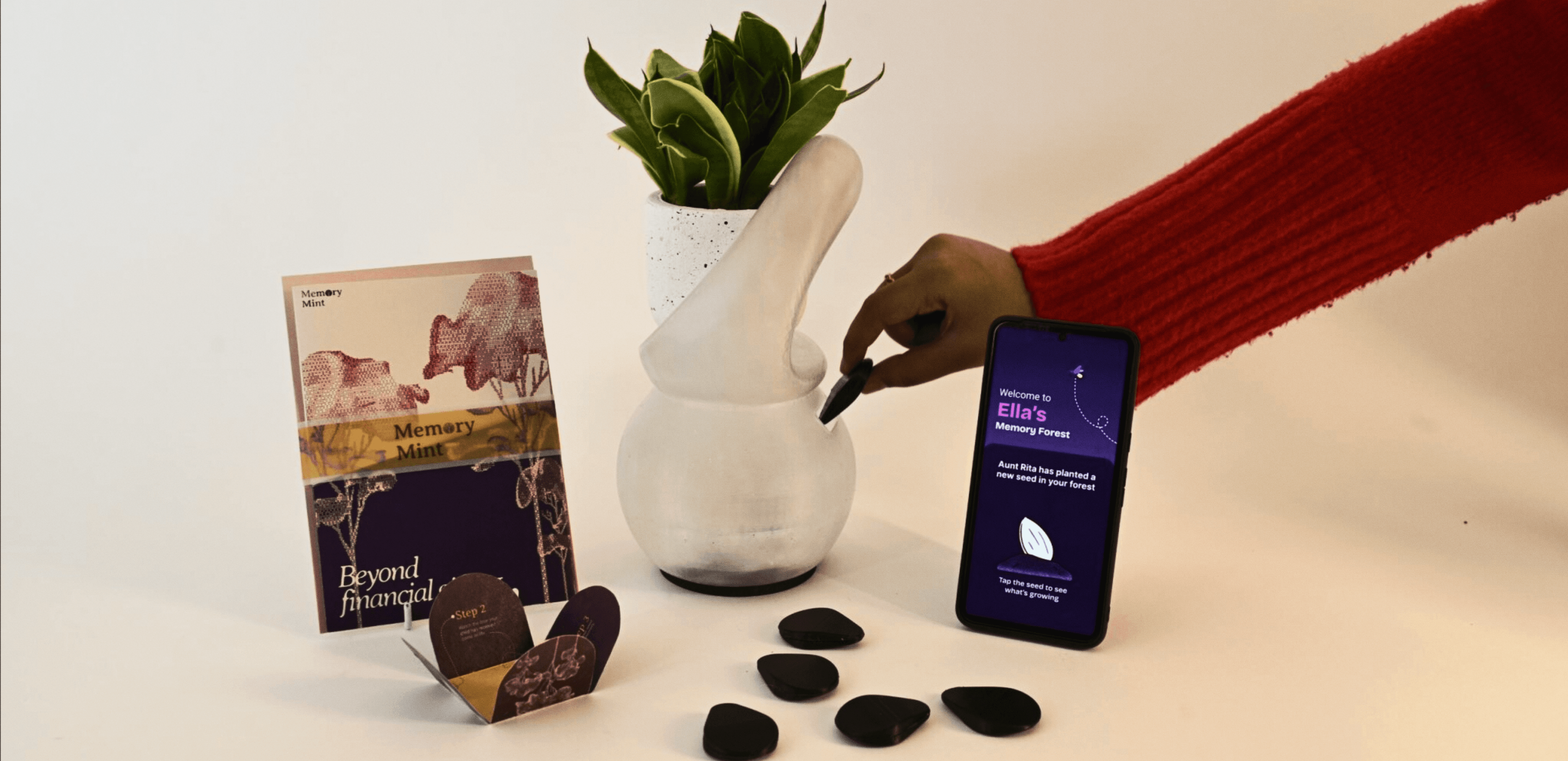
Micro Unit
Beginning without a fixed brief required us to move inward before moving outward, to interrogate what kind of design I wanted to create and where my own sphere of impact might lie.
Yet, the challenge was doubled: the brief needed to resonate not just with me, but with three other team members. This marked the beginning of a long process of simultaneous introspection and collective alignment, a tension that continued to shape this project throughout the next 5 months.
To ground this exploration, we turned to Stream of Consciousness writing, a method associated with literary figures such as Virginia Woolf and James Joyce. As literary scholar Humphrey (1954) describes, stream-of-consciousness techniques enable the articulation of inner thought flows in their raw, unfiltered form, making them particularly useful for uncovering tacit motivations, values, and emotional undercurrents. For us, this practice became a generative tool for surfacing individual perspectives while also creating a shared discursive space for the team.
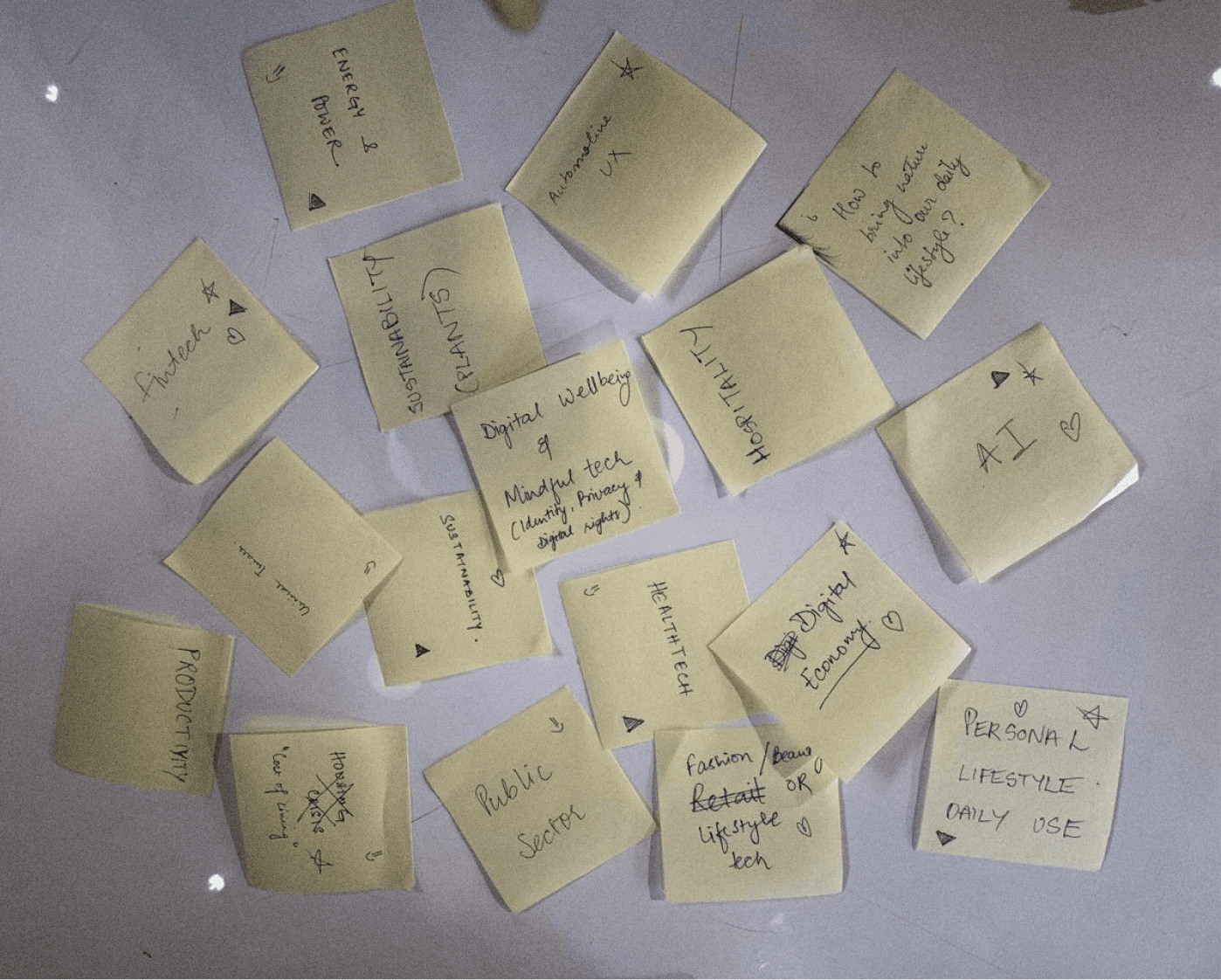
The resounding insight that emerged was our collective desire to explore a space in which money ceases to operate solely as a transactional instrument. Instead, it converges with other social domains, allowing its effects to ripple outward.
This raised a central design question for us: How might we create these intersecting spaces while still keeping finance as our grounding principle?
We zoomed out, and the glaring answer for us was the cost of living crisis. It was too big, but it sufficiently answered our question; it was a zone where monetary effects affected food, housing, and the daily living of the masses.
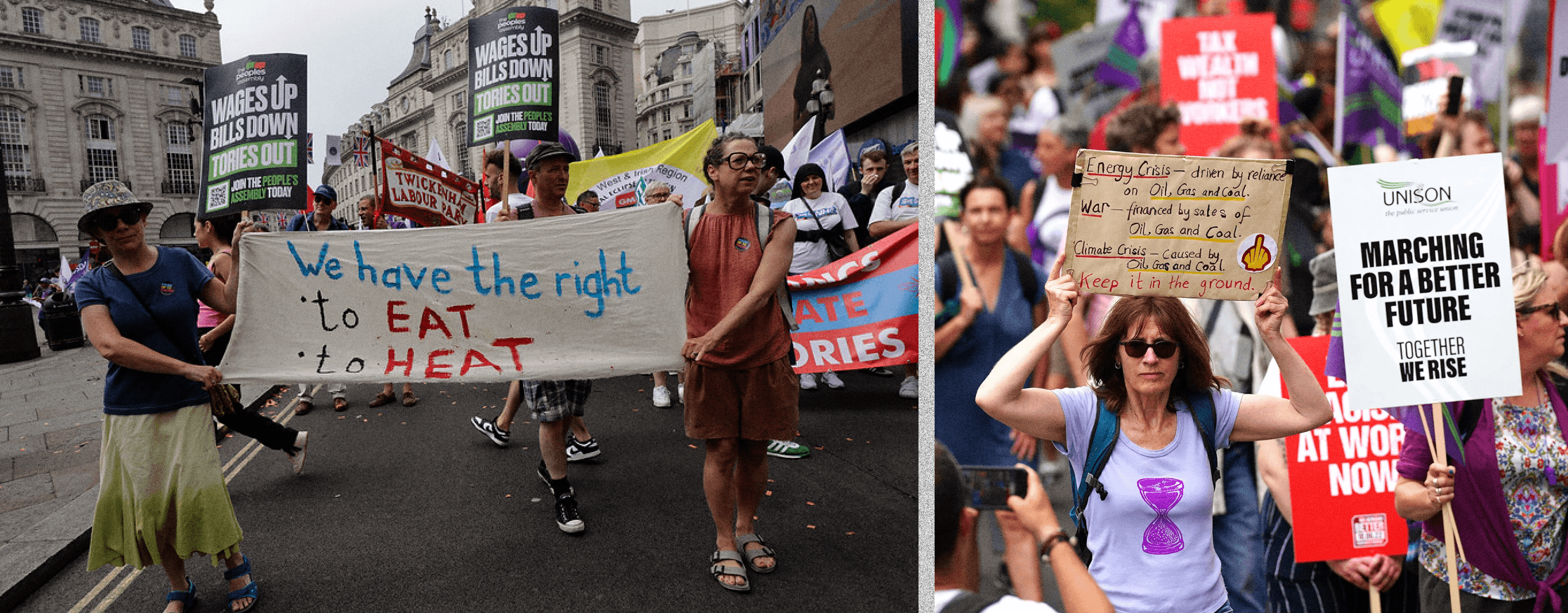
Cost of living crisis in London
We were asked to narrow our focus and begin with a smaller, more tangible entry point; without this, we risked circling endlessly within the expansive terrain of wicked problems. Designing any meaningful system first required understanding the specific touchpoints of interaction embedded within the vast, interconnected issue we had chosen.
We needed to look for a juncture where different niches coincide and start from there, because when different systems merge, there is bound to be an intersection for interventions.
The cost-of-living crisis is profoundly complex and cannot be ‘solved’ through design alone; it demands multiple, intersecting interventions, including policy-level action, to make even incremental progress. This raised an uncomfortable question for us: Had we taken on more than a design project could reasonably hold?
Thus, we entered the next phase. Drawing on Frayling’s (1993) distinction between different modes of design research: Research for design, Research through design, & Research into design. We began with “research for design.” This meant going out into the world, visiting real contexts, and speaking with people directly to uncover a tangible entry point. It also allowed us to identify which aspects of the problem resonated with us as designers and were worth pursuing more deeply.
Buchanan, R. (1992) ‘Wicked Problems in Design Thinking’, Design Issues, 8(2), pp. 5–21.
Frayling, C. (1993) ‘Research in Art and Design’, Royal College of Art Research Papers, 1(1), pp. 1–5.
Humphrey, R. (1954) Stream of Consciousness in the Modern Novel. Berkeley: University of California Press.
Thousands march to demand help with cost-of-living crisis (2022) [Photograph]. Available at: https://www.bloomberg.com/news/articles/2022-06-18/thousands-march-to-demand-help-with-cost-of-living-crisis
Why Does Primary Care Play a Pivotal Role in the Cost of Living Crisis – Steve Eason (no date) [Photograph]. Available at: https://www.idsmedia.co.uk/news/why-does-primary-care-play-a-pivotal-role-in-the-cost-of-living-crisis/
✨ Keep Exploring ✨