Micro Unit
Before starting our Research for Design phase, we first had to question where we stood and clarify what money actually meant to us. This step was important because it determined the perspective we would use to look at money, as well as helping us decide where to focus our research and who to talk to.
We started by writing down every word and idea that popped into our heads when we thought of money. From there, we used a creative exercise to explore our own biases and find holes in the system, areas where a new design could make a difference.
Using the long list of words we had come up with, we looked for connections to see where design could have a real impact. We did this by:
Picking three words from our Mind Map that felt important.
Using "stream of consciousness" (free-flow) writing to link, challenge, and analyze those three words together.
We repeated this exercise twice, creating two sets. While doing this, we had a major realization: money on its own isn't the whole story. To really understand its effect, we have to look at the emotions tied to it.
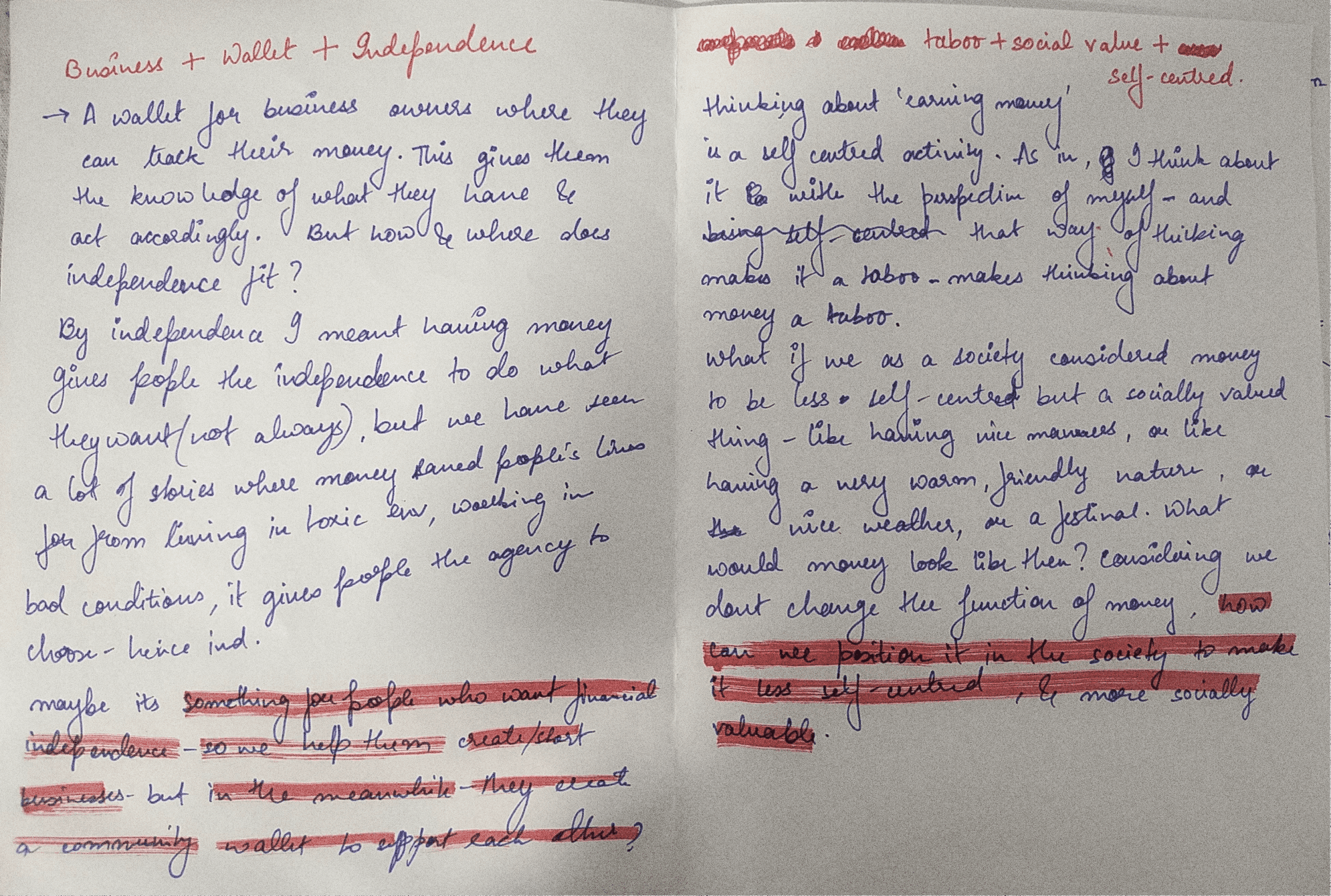
My word cluster & ideation
At this stage, we pinpointed exactly where we wanted to go and who we wanted to meet for our Research for Design phase.
Museum of Homelessness (MOH)
This place acts as a living record of how money systems create real physical inequality—especially during the current cost-of-living crisis. Unlike a normal museum, every object here was picked on purpose and matched with a story explaining how it helped someone survive day-to-day. For example, a basic black trash bag was used as a raincoat. It showed how people get creative when they have no choice, especially in a rainy city.
Talking to the guide helped us see how problems like poor healthcare can cause homelessness. We also learned that being clever and having community support often fills the gaps when money is tight. The main lesson was realizing that money means different things in different situations. When official systems fail, other things become valuable—like caring for others, resilience, and shared creativity.
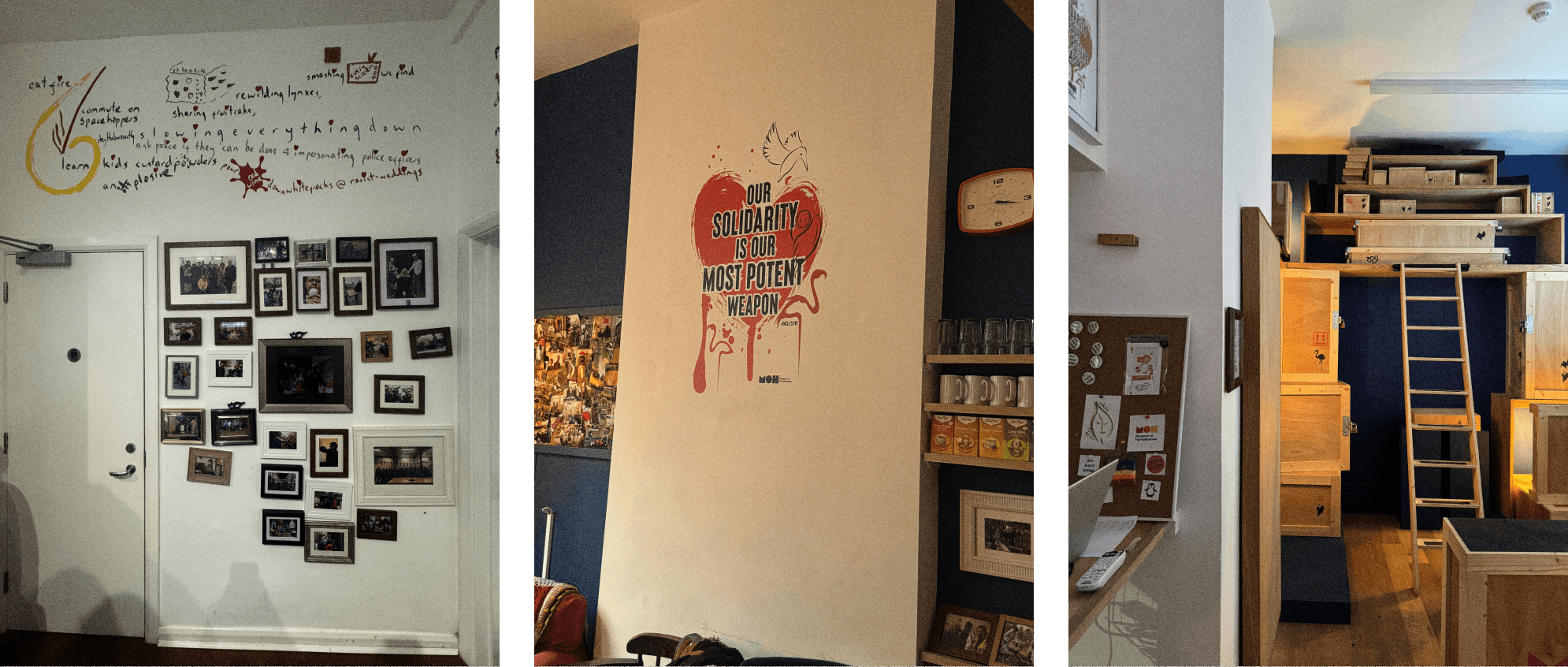
Museum of homelessness
Bank of England Museum (BOEM)
This museum was completely different from the first one, but it gave us a full picture of the current work being done on money, currency, and financial education. The hands-on displays and objects made it very engaging, and we actually used this style as inspiration later for our own Postgraduate Design Exhibition.
As the Bank of England notes in Can’t We Just Print More Money?, money isn't just for trading things; it represents trust, culture, and our shared values. This idea really clicked with our growing understanding of how finance affects society.
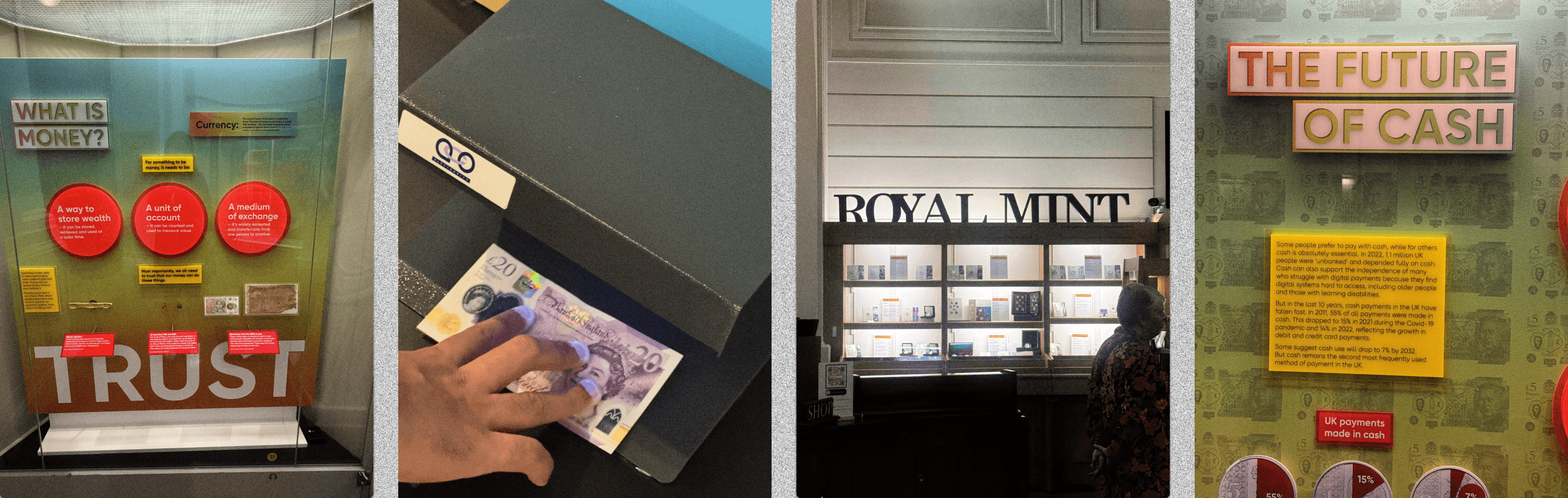
Through both of these visits, our view of assets, money, and financial freedom changed a lot. The Museum of Homelessness showed us one extreme side of finance, while the BOEM served as a record of established knowledge in the field.
These discoveries also showed us what was missing: we still needed to know how everyday people—those not fitting into specific rich or poor categories—feel about and understand money right now. We wanted to hear from regular people we might meet anywhere, without any prior assumptions influencing us.
Realizing this led us to our next step: finding participants and digging deeper into real-life money stories.
✨ Keep Exploring ✨