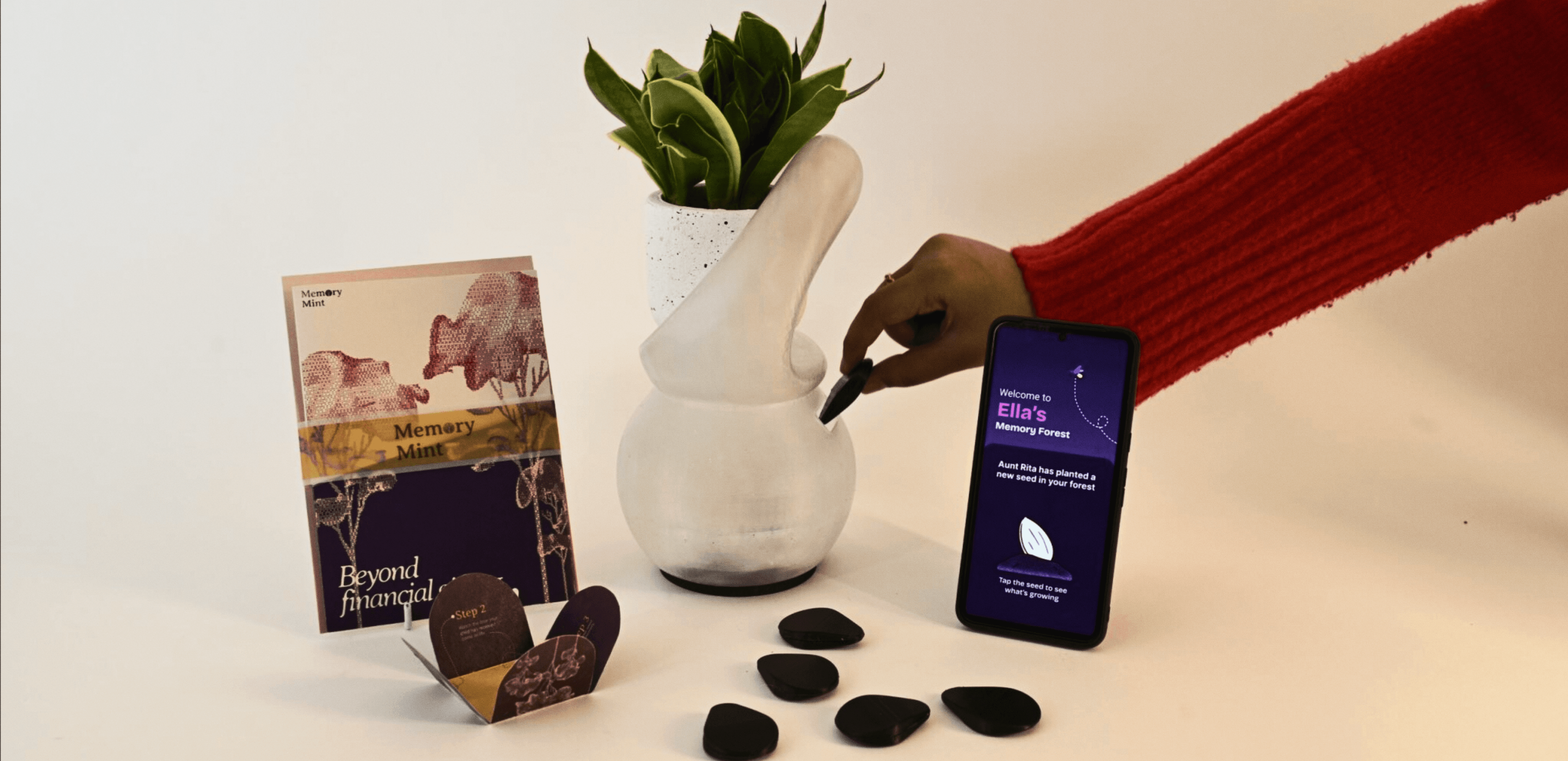
Micro Unit
We visited Camberwell Park and Library, anticipating that the play area would make it easier to meet parents. As non-parents, I initially approached the topic from a highly rational standpoint, framing my core question as: “When do people feel financially prepared to have a child?”
My Key Takeaway
This became an important moment of reflection. It made us rethink our approach and shift the guiding question to: “How can someone better prepare for having a child?”
Our early ideation took the form of a game for baby showers. Baby showers felt like a natural moment for knowledge-sharing among soon-to-be parents, so we explored whether a board game could help couples map priorities, negotiate decisions, and explore the idea that “it takes a village to raise a child.”
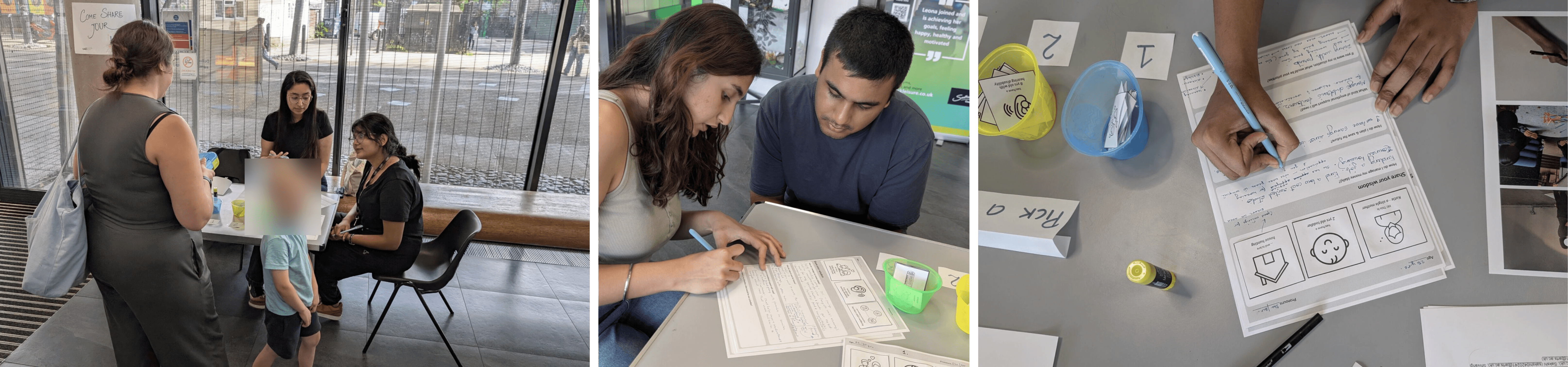
To shape the game mechanics and minimize our own biases, we designed a co-creation workshop, & my teammates held it at Peckham Library during the summer, specifically targeting parents and toddlers during "Rhyme Sessions" to aid recruitment.
The Activity: The workshop centred around fictional characters, “Katie” and her partner, “Frank.” Participants were presented with three options which generated a total of six possible scenarios reflecting real transitional phases. Parents were invited to share advice—both financial and emotional—drawing from their own lived experiences to guide Katie.
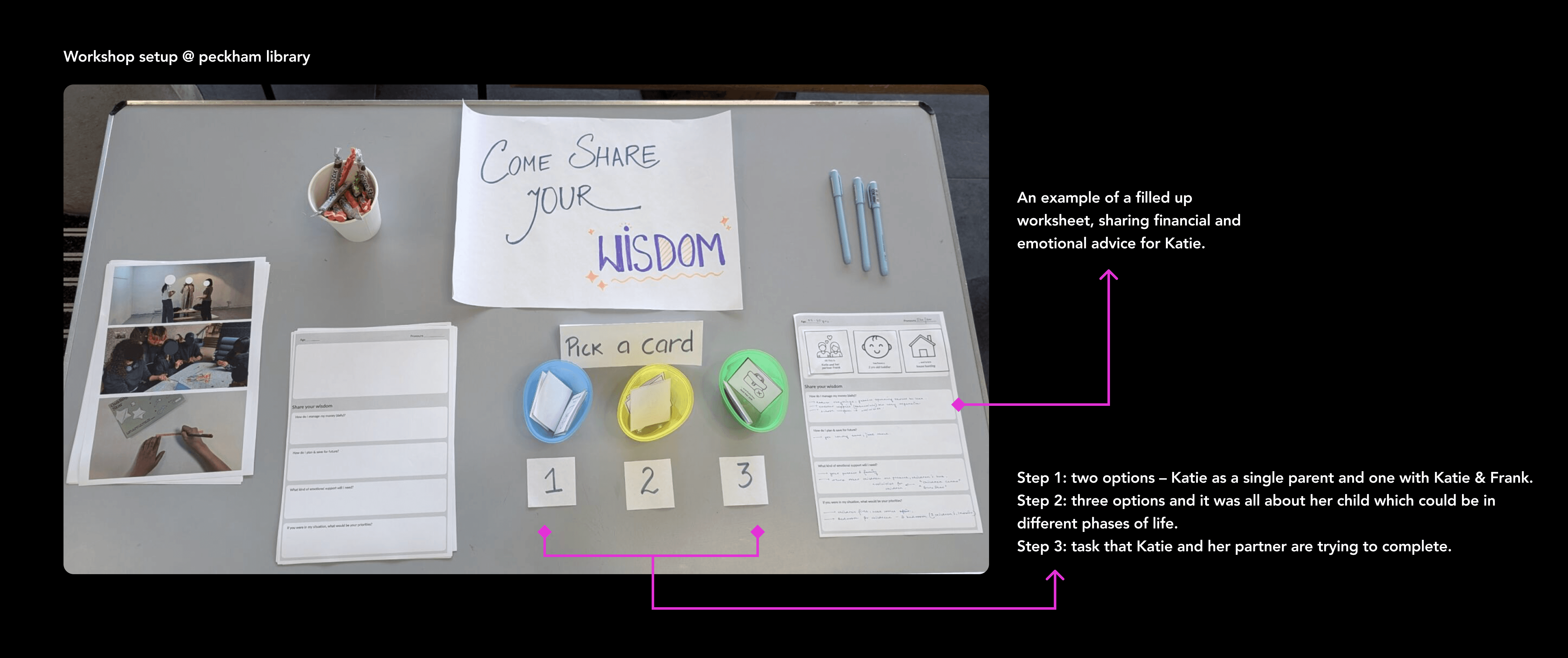
Workshop at Peckham Library
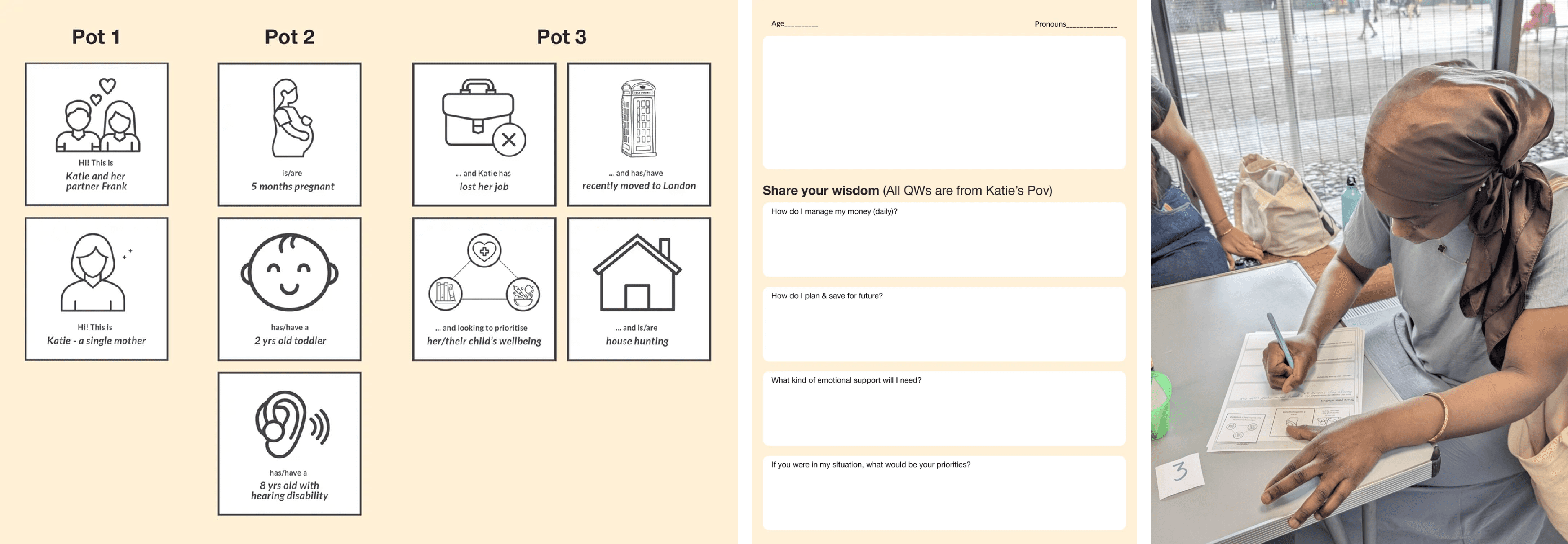
Left to right: Options available to create a random storyline featuring Katie. The worksheet where one is supposed to share their advice with Katie. Participant filling up a worksheet.
Participants emphasized that during the early years of parenthood, emotional backing and community help matter more than just money management tips.
Much of the practical advice focused on using established UK financial tools, such as government grants and Junior ISAs. A recurring theme was how crucial a supportive partner is, directly influencing the mother's mental well-being.
These insights became the bridge to understanding how a tool might help parents recognise resources, balance emotional and financial wellbeing, and understand the opportunity cost of raising a child.
Relying on a single, conventional family model limited inclusivity. The format was too rigid for true co-creation, causing participants to rely on prompts rather than leading the activity.
The specific story scenario failed to engage participants, leading them to focus on worksheets and offer generic advice. Future iterations require stronger storytelling and generative elements. Children present were eager to participate. A redesign should intentionally incorporate them, transforming the workshop into a collaborative, generative tool for both parents and children.
✨ Keep Exploring ✨