
Micro Unit
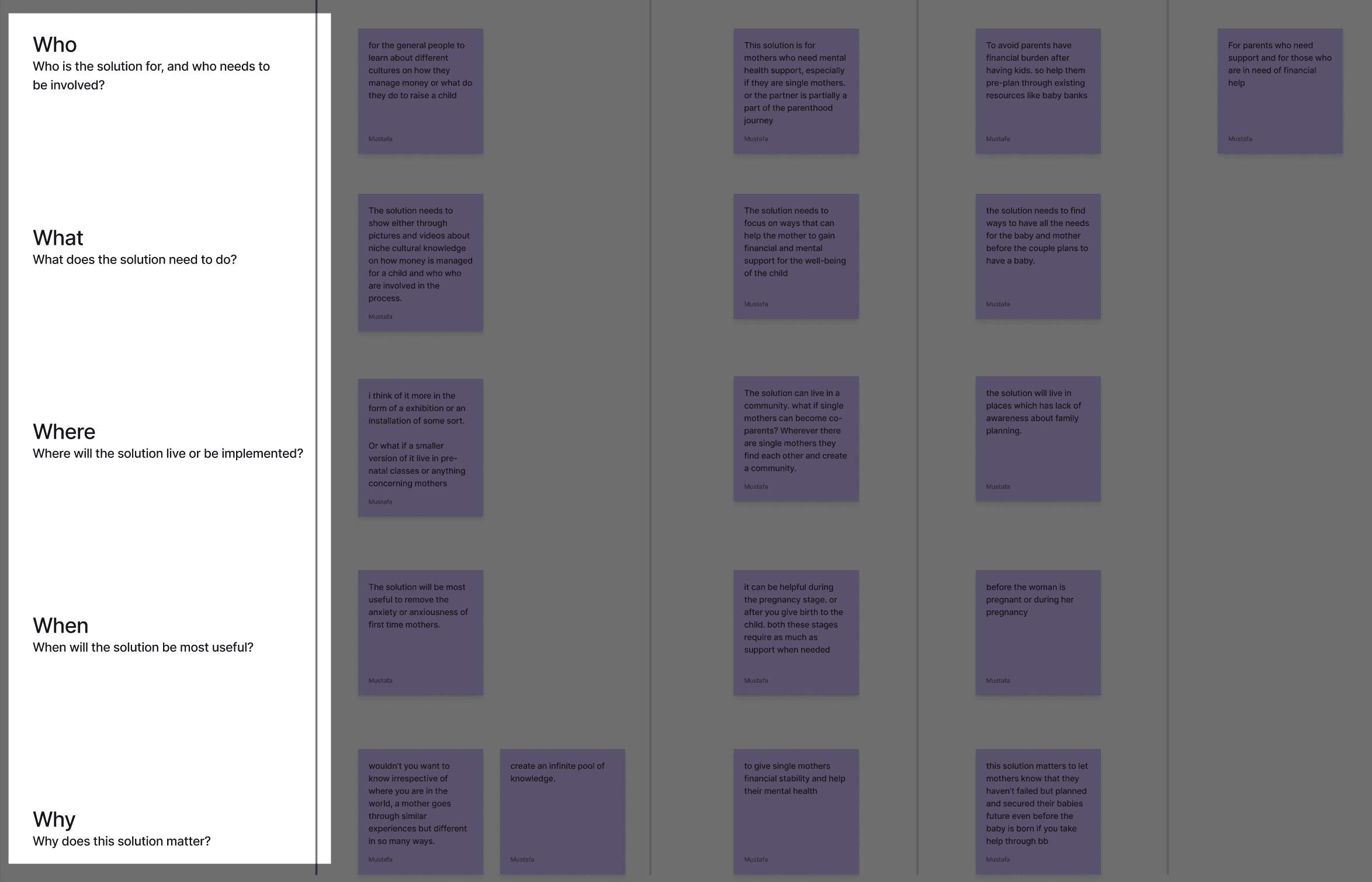
This analysis method, which I learned during this process, helped us flesh out high-level thoughts into detailed concepts. It allowed us to understand both the underlying value and the feasibility of each idea if it were to be made a reality.
Following this, we filtered out the four best ideas to "Speed Date" with new or expecting mothers.
The 4 Selected Ideas
For this phase, we limited our speed dating participants to parents living in the UK who are expecting children or have had one in the last 3 years. While this constraint narrowed our search, it was beneficial for the ideation and prototyping process.
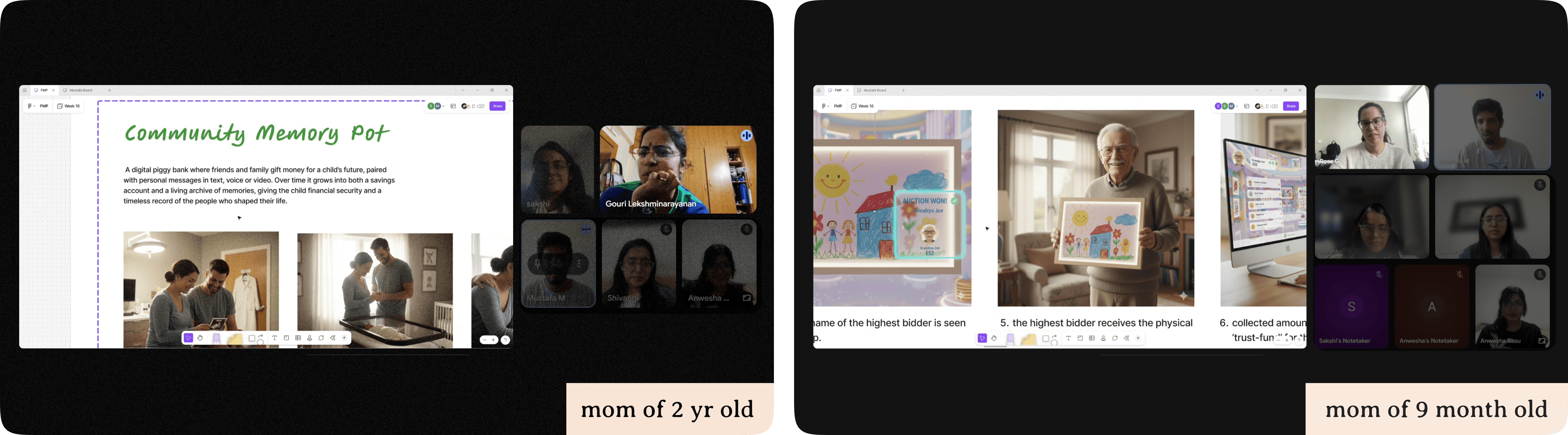
We utilised AI-generated storyboards to help participants visualize and understand our ideas, conducting a total of 5 speed dating sessions.

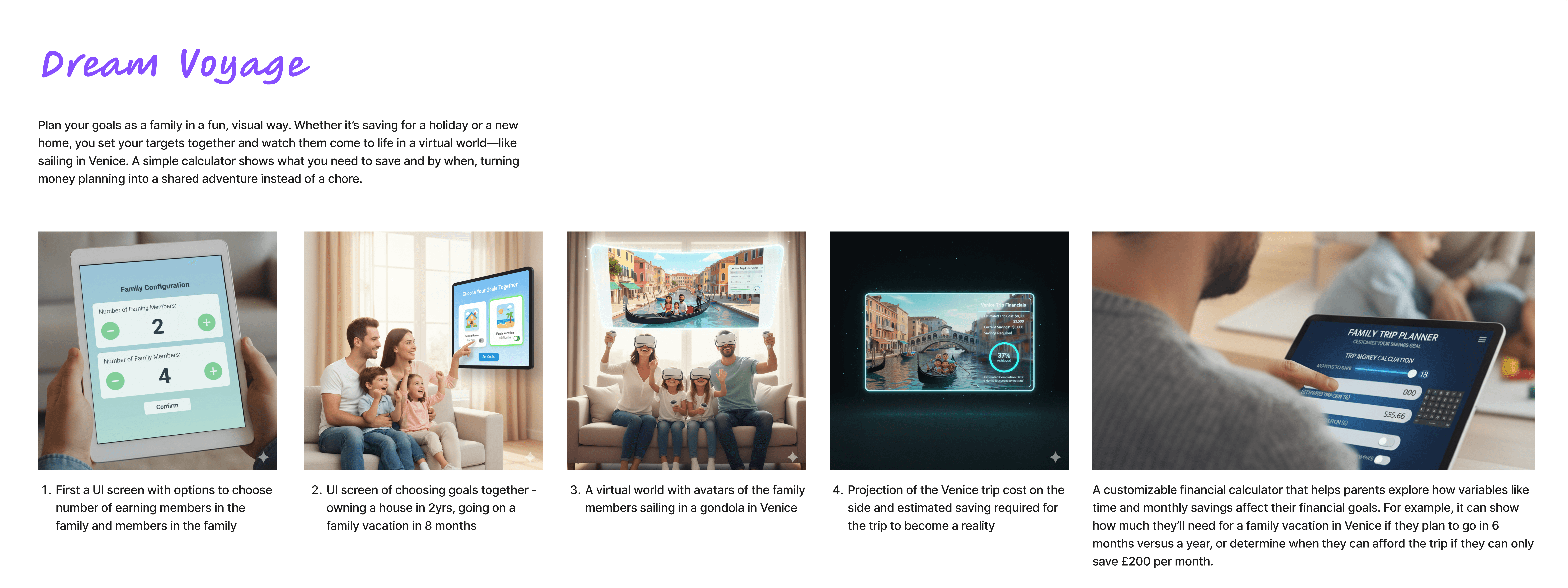
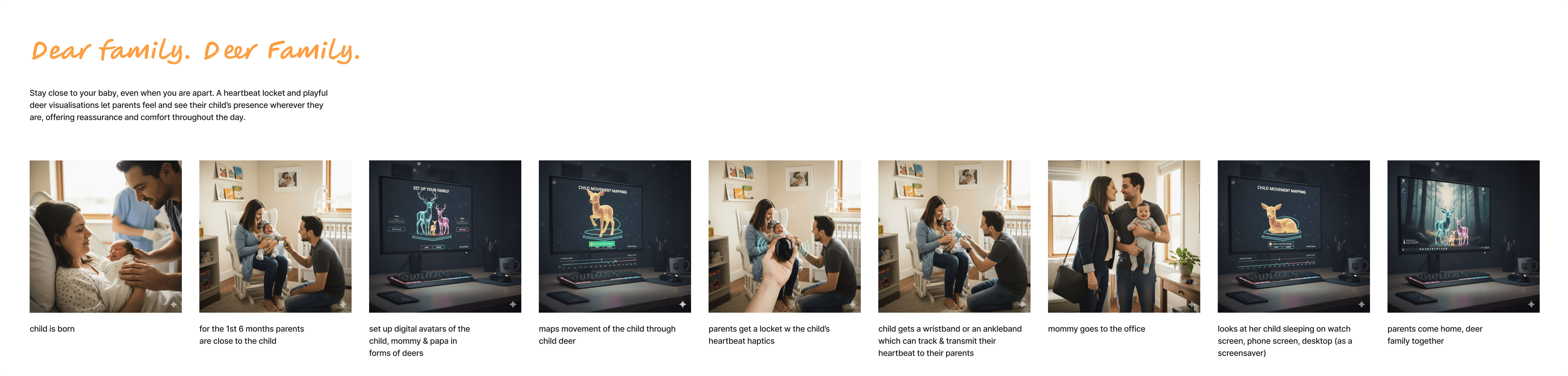

Kick Investor" and "Dear Deer" did not receive significant attention or validation from participants, as they were perceived as lacking realism and utility. Additionally, feedback on "Child’s Art Auction" centered on concerns that it introduced competition and monetisation into deeply intimate family relationships. This risked unsettling family dynamics and creating transactional associations between the child and their caregivers.
This idea resonated with all 3 mothers, they found it wholesome, could envision its value in the long run & they found this intervention to fit in their lives right now. However, like the art auction idea, some concerns were raised about biases being formed in the kid’s mind about the amount of money & relatives who are paying less/more.
With "Memory Mint," the improved version of this idea, we attempted to address these concerns by ensuring that contributions remained invisible to the child and were only the sum was accessible once they reached adulthood. However, this raised an important question: Have we genuinely succeeded in removing the influence and implications of money from such intimate relational spaces?
Another interesting realisation occurred when we presented these ideas to mothers. Their immediate reaction was to evaluate which concept would fit seamlessly into their current lives, or which seemed the most sensible and realistic.
This highlighted a crucial tension: while user feedback is valid, relying completely on participant opinion may not be relevant when aiming to create something bold and unique. Users often default to familiarity, potentially rejecting ideas that challenge the status quo.
✨ Keep Exploring ✨