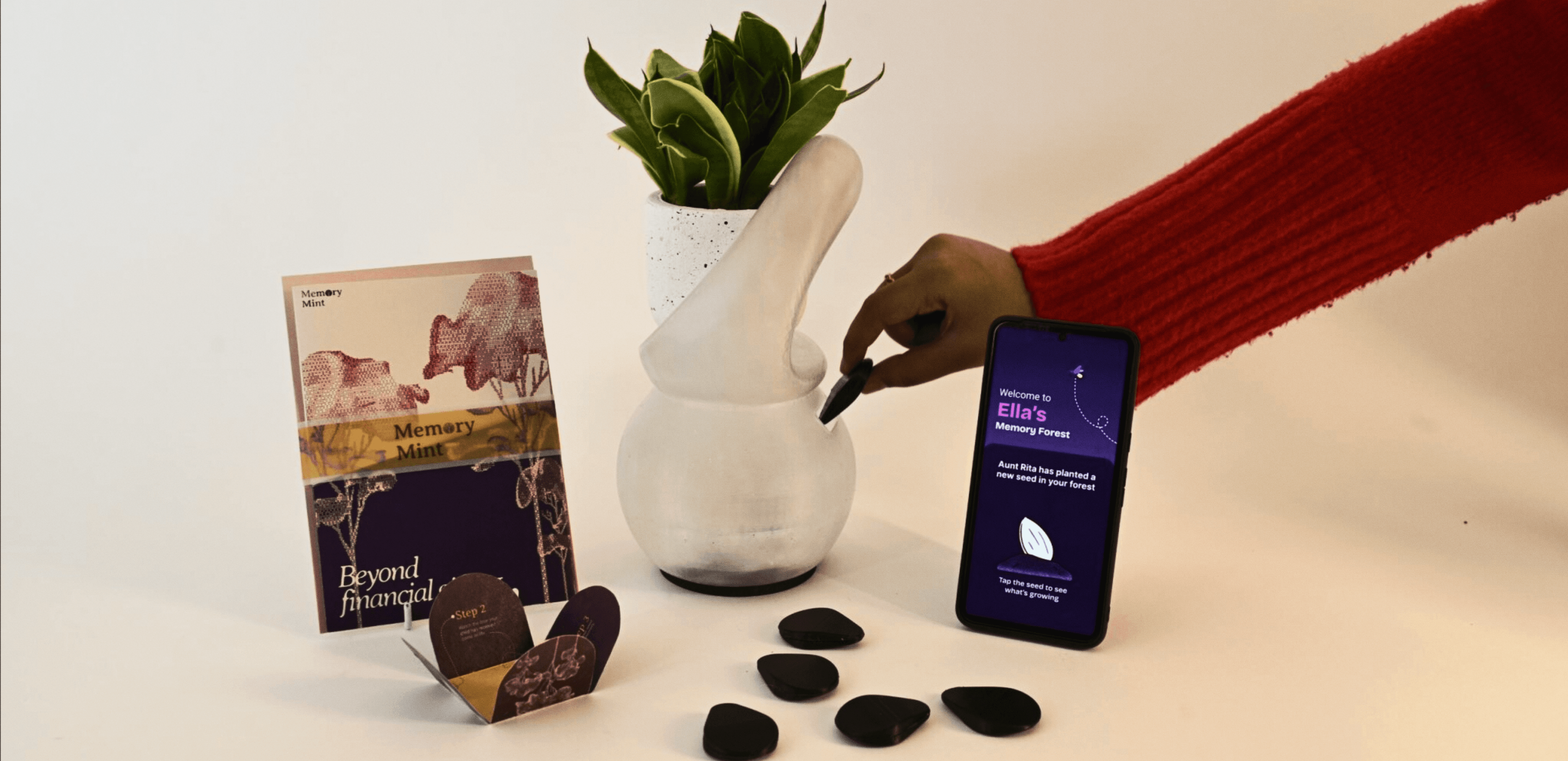
Micro Unit
The entire system design was well received and understood by the audience, which was a huge win for us because of the scale & complexity of what we had designed, explaining it all in 5 minutes needed a lot of strategic communication.
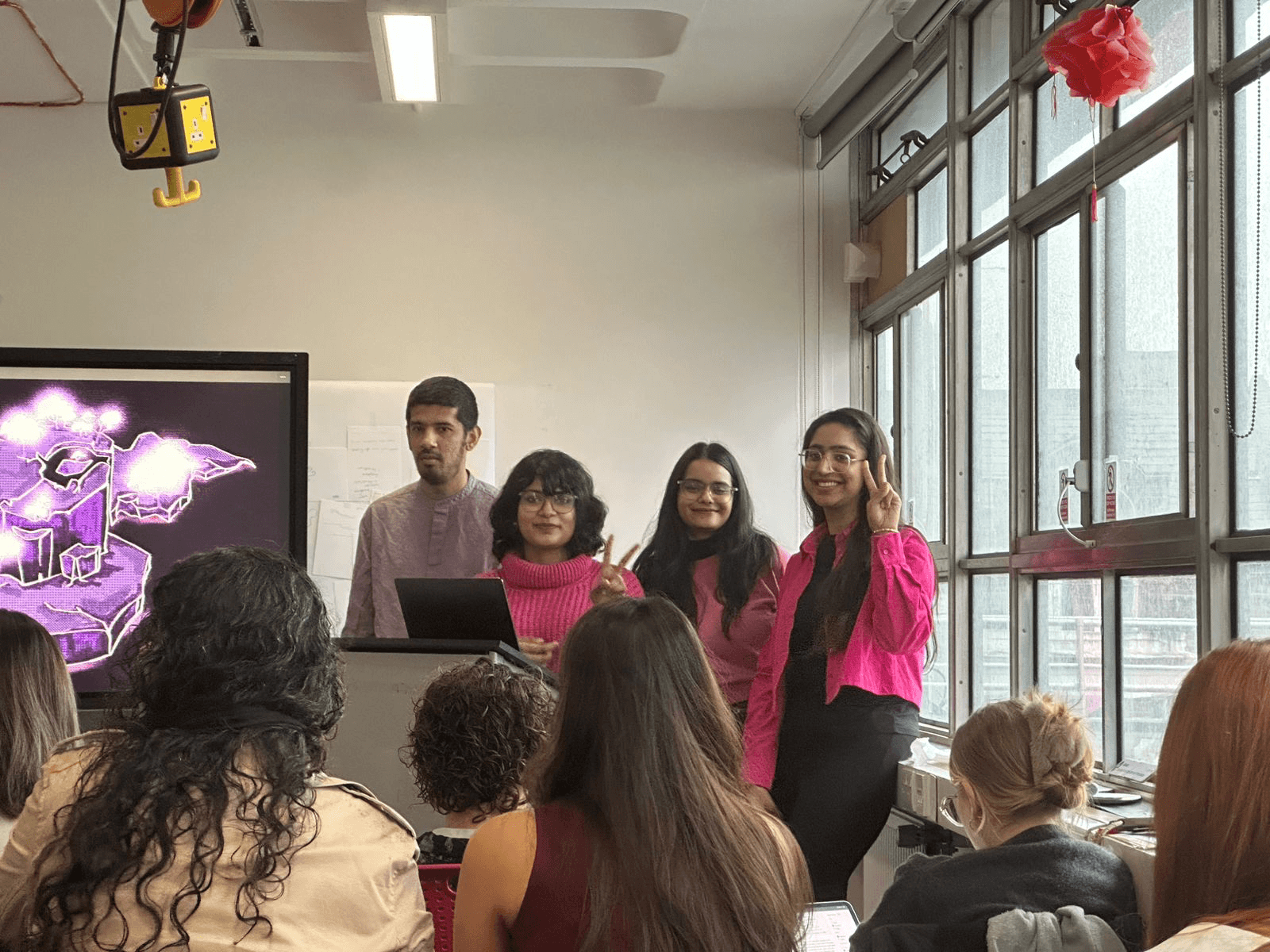
The response to Memory Mint was largely positive, with the class praising the welcoming colour palette, sensory appeal, and the clear visual language connecting the physical artifacts to the digital journey. While the concept was seen as well-realised, reviewers questioned whether the system might contain too many components and requested a more detailed breakdown of each specific artifact.
There were also key questions regarding the product's longevity and use—specifically, how parents would encounter the product initially, what the sender would receive in return, and how the system would handle practical issues like cloud security, technological obsolescence, or the plant dying. Finally, the group was keen to know if the plant could be placed outdoors and, most importantly, if the experience had been tested with parents.
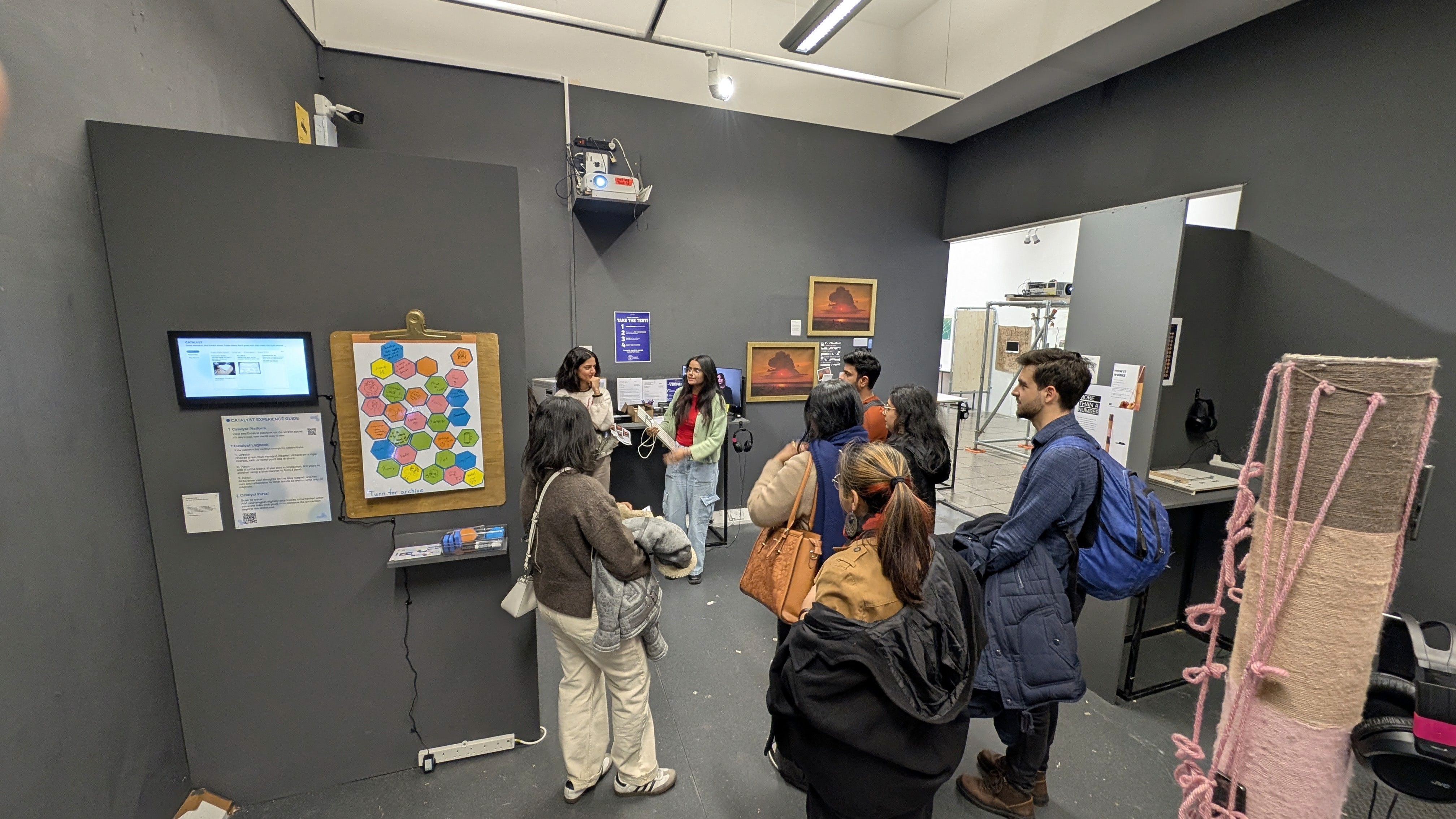
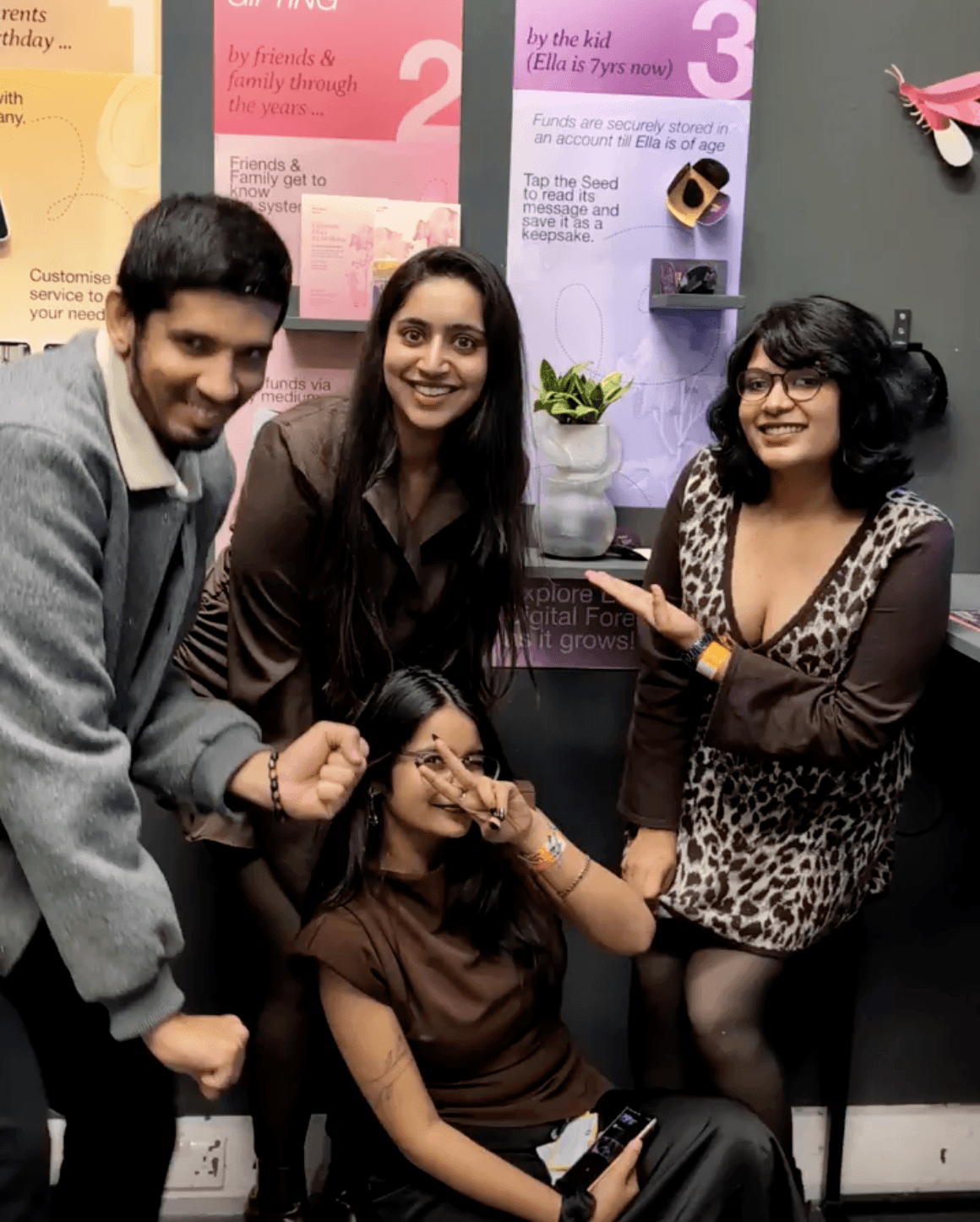
The final step was presenting all our hard work for the postgrad design exhibition, held at LCC from 17th Nov - 20th Nov 2025.
Preparation for the exhibition began with the crucial task of bringing all our individual assets together into a cohesive whole. We made sure every part fit into our main story. At the same time, we dedicated significant effort to outreach, inviting professionals to attend, test, and critique our work. This phase also involved high-level curation for the entire show, determining the best way to present our collective vision as a cohort.
Setting up came with its own challenges. We had to figure out how to display every piece of our work effectively, which was made harder by our location changing multiple times. We had to keep adapting our plans to fit each new space.
Our main focus was making sure the layout was clear so visitors could easily follow the different user journeys and understand the separate parts of the system. This period also included several iterations with the touchdesigner experience to ensure that it works properly in the exhibition space as it would get very crowded.
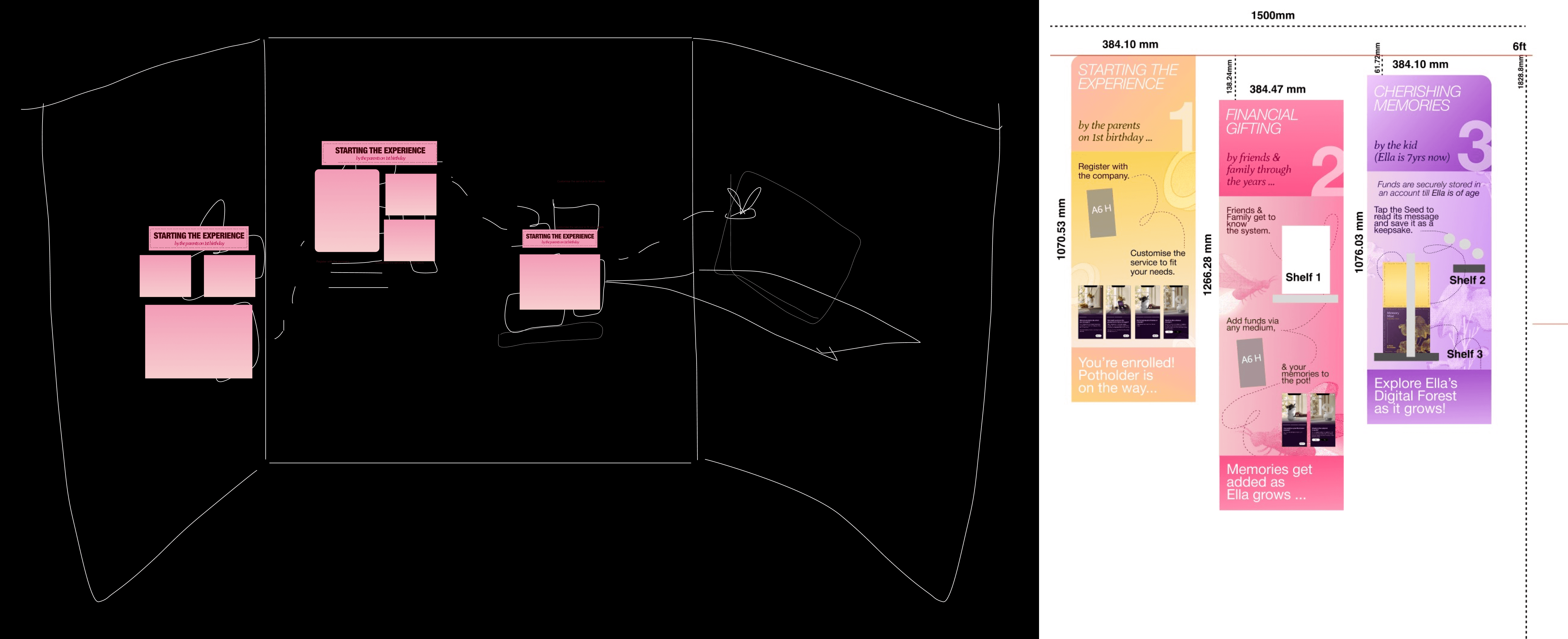
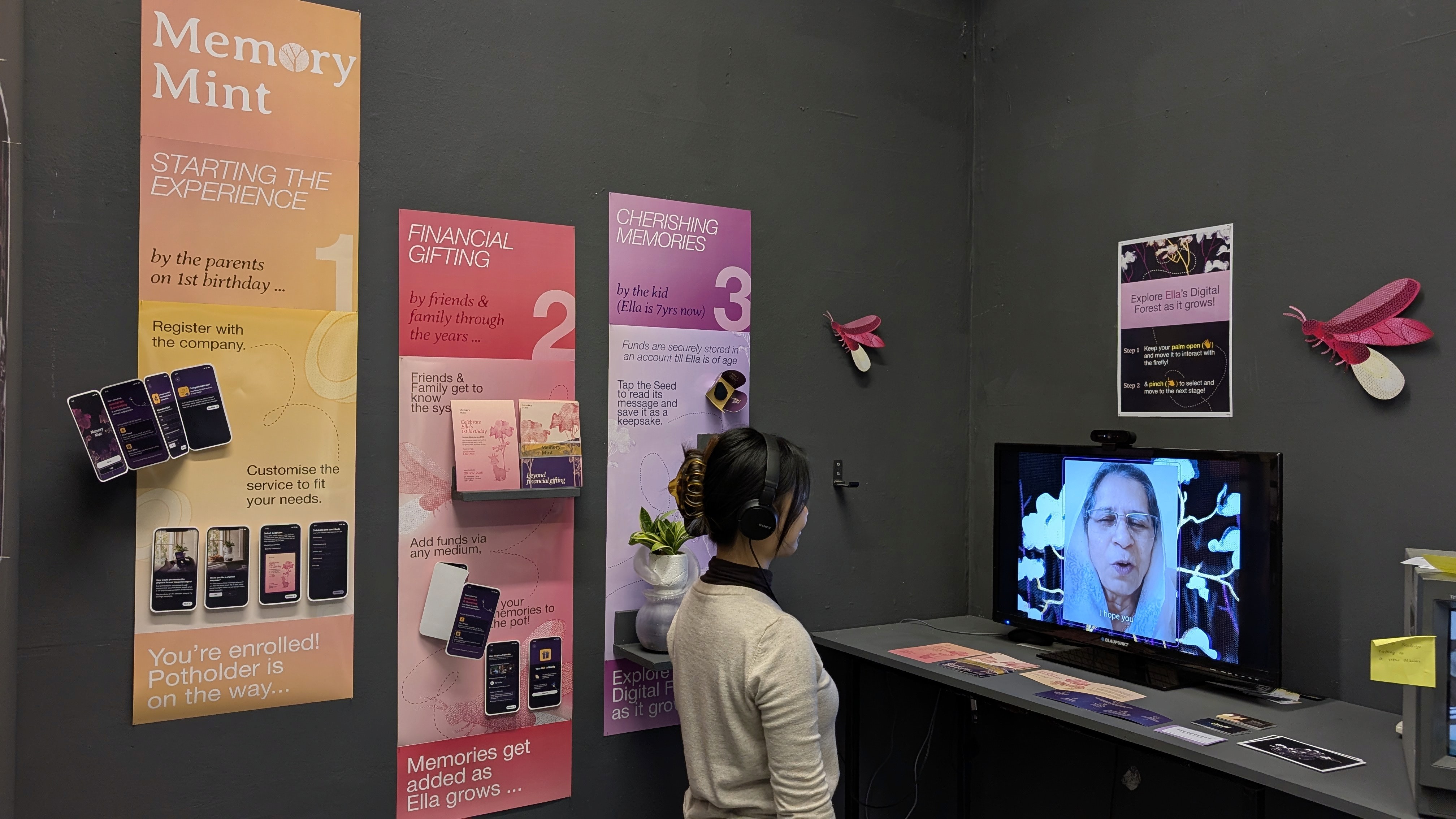
During the show itself, our primary goal was to ensure that the complex narrative remained accessible. We focused on presenting the work in a way that made the distinct sub-journeys—designed for different types of users—immediately understandable. It was vital that visitors could easily follow the specific paths we had designed without getting lost in the complexity of the overall project.
We learnt a lot of personal anecdotes through the conversations. We also conducted surveys to understand how prepared individuals would feel in the context of financial gifting with respect to cultures and with respect to familial bonds and privacy.
We also used a “Memory Seed” equipped with an NFC chip, which was kept in the exhibition space. This allowed visitors to simply tap the object with their phones and type out their thoughts immediately.
Connecting Generations: One visitor shared a touching story about losing their mother when their daughter was just nine months old. They felt that if a tool like ours had existed back then, it would have helped bridge the gap between grandmother and granddaughter.
The "Boring" Bank Problem: Mor Bakal mentioned she had recently opened a bank account for her seven-year-old. She described the process as “dry” and uninspiring, confirming our belief that current financial tools for kids lack emotional connection.
Real-World Viability: Many people felt the concept had genuine potential but emphasized that we would need to partner with established banks to make it work in the real world.
Visual Tone: A student from the MAUX course felt the visual style was "too dark" and wasn't sure if the mood was meant to be happy or sad. While taste is subjective, we explained that this look was intentional—we wanted to capture the feeling of deep nostalgia and the weight of holding onto memories, rather than just making it look cheerful.
Business Perspective: The Service Design group gave us a very different kind of feedback. They looked at it through a business lens, helping us figure out how the service ecosystem would work and what operational steps we’d need to take to scale Memory Mint up.
✨ Keep Exploring ✨